Friday, January 18, 2008

Day Eight


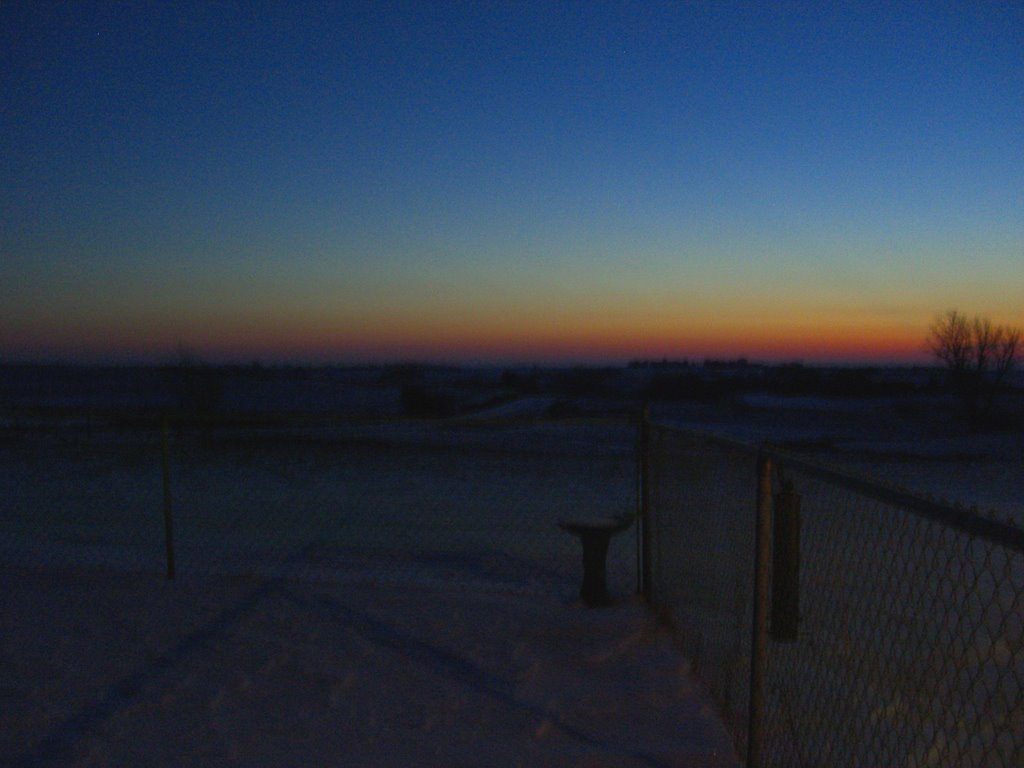
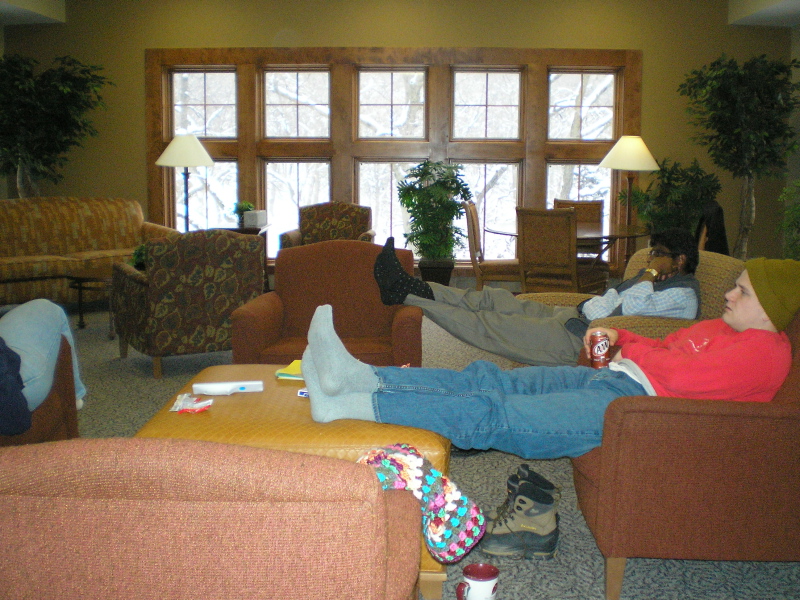
Day Eight, and we’re still lost in Nebraska. As you can see from the above picture, today our immersion kicked into a new gear when they dropped us off in the middle of a random snowy field and drove away. If we could find our way back into town on our own, we would finally be ready for rural ministry. They didn’t put this part in the course description…

Our first stop today was a federated ELCA/United Methodist church in Potter, Nebraska, where we enjoyed orange juice and lemon-poppy seed muffins. Rev. Terry Tomlinson, an ordained Methodist minister with over 30 years of experience, is the pastor there, and he shared with us some of the challenges, joys, and lessons of his work pastoring a dual-denominational church in small town. Our conversation with Pastor Tomlinson was one of our most helpful yet, as he emphasized the importance of having colleagues and the crucial importance of loving your people. One of the many, many ways he does this is by coaching a local high school basketball team, which some of us found ridiculously cool. (New dream: Become pastor in small town, coach local freshman basketball team, meet my brother’s freshman basketball team in tournament finals, beat my brother’s team in double overtime thriller. Any thoughts, Greg?)

From Potter we came back in the direction of Sidney to the Mathewson family farm, where they’re preparing for calving season next month. We toured part of the farm, then stopped back at their home, where Annette has been staying all week, to enjoy hot chocolate and cookies and even a few rounds of pool.


Since we’d only had breakfast and two coffee/cookie breaks, it was time for dinner. Dinner was an event in itself, as we headed back out to Potter to eat at the famous Potter Sundry restaurant.


Naturally, we ran into more of Kent’s extended family, an occurrence that has become something of a running theme of our trip. We ordered turkey dinners for under five bucks, and then enjoyed a famous Tin Roof Sundae, a gooey, nutty, chocolaty, ice creamy mess of deliciousness.


Next we headed out to open country, where we left the highways and byways and even the gravel roads in a determined archaeological quest that would make Indiana Jones proud. This was the true reason behind our tromping through vast snow-covered fields, and it was well worth it. Kent took us to the ruins of St. Peter’s Danish Evangelical Lutheran Church, established in 1903 by hardy Danish immigrants. It was amazing to find something like this in the middle of a field; the place seemed to breathe with history. And of course, it was fun just to romp around in the deep snowdrifts.


From there we headed to the Julius Nielson homestead, established in 1886, not quite as ruinously crumbly as the church but a historical find nevertheless.


Kent shared with us why this site was so important to him. “I wanted you to see,” he said, “that the first thing these people did was build a home for their family. The second thing they did was build a church. And now it’s our job to keep it going.” Roots run deep here; learning to understand that has been one of the true gifts of this trip. The people of the Nebraska panhandle have opened their hearts and homes and histories to us, and all that hits home on a day like today.

Before going home we stopped at one more church, First English Lutheran Church in Kimball. Pastor Wayne Hunzeker and especially his wife shared openly with us their experience of rural ministry and of living in a rural community. Every one of the pastors we have visited with on this trip has been different; each has shown us a different slice of rural ministry, a different angle, a different approach. These conversations have helped unfold for us the rich diversity, the exciting possibilities, and the concrete realities of rural ministry in the Nebraska panhandle. It’s been extremely helpful.

On our way back to Sidney, Adam and I were dropped off at the Cook homestead for the night. My host family, you see, was in Denver for the day attending the annual National Western Stock Show. Adam and I were to do the evening chores on our own. (Read that last sentence one more time. You can pick your jaw up off the floor now.) When we arrived, the cattle were hungry, and they let us know with all the lowing they could muster, so we quickly bundled up and headed out, checklist and pitchforks in hand. We fed the steer, then the cows, then the heifers, filled the massive tanks with water, fed the cats and rabbits and dogs, and finally mustered up the courage to shoulder our way into the henhouse and collect a few eggs amid lots of squawks and feathers.


When we were done we had earned our dinner of gourmet leftovers, including, yes, crème brûlée (finally fixed that spelling, Leslie) that we fired the top of ourselves. Anytime you use a pitchfork and a tiny flamethrower in the same 24 hours, you know you’ve had a good day. By this point Ken and Leslie had arrived at home, and Adam picked their brains about veterinary practices and clay shooting and the various varieties of cooking salt before we all finally turned in for the night.

Tomorrow we’ll only have a half-day of activities, and then close with an evening of social time with all of our host families together. It’ll be our last full day in the state of Nebraska. To paraphrase a Nebraskan: This may not be the end of the week, but you can see it from here.


MCK

Day Seven

When you wake up with Zoey scratching at your door, you know it’s going to be a good day. A cold day, to be sure, as low as –5 this morning, but I wore four layers with long underwear, wool socks, and a sweet hat from Nepal. One thing I’ve learned out here on the panhandle: Nature matters.

Today we jumped right into that theme from the get-go, stopping at a family farm where creation is in full view.


This stop was kind of special for me: I have grandparents in northwestern Iowa (hi Papa and Grandma if you’re reading this); we often visited their friends who lived on farms, and this farm was so similar to those that it brought back memories from visits long ago. There are more cattle here instead of pigs, some of the equipment is different, but that feel of being inside a family farmhouse with really friendly people who have lots of stories to tell…that sense was just the same somehow. We enjoyed brownies and cookies and some delicious cinnamon coffee before being on our way.

From there we headed out to Ogallala, once called the “Gomorrah of the West” for its abundance of brothels and bars and lack of church steeples. Ogallala’s a bit more tame now, but the Ogallala Livestock Auction is still going strong.


We walked along the catwalk and watched the cattle being herded around by cowboys (real live cowboys! yes we’re urban nerds alright), then headed inside to experience the actual sales. Doors open on the right, cattle rush in and walk around in circles while the auctioneer does his thing, and then the doors open on the left and the cattle rush out…then it starts all over again.


At the auction Kent, our fearless Nebraskan leader, ran into his brother. Either Kent has them all planted for effect, or finding friends and family at every turn seems to be a common theme out here…either way, it’s pretty cool.

We grabbed some lunch (or dinner, I suppose) before making our way to Lake McConaughy. That’s right, there’s a lake in western Nebraska. I wouldn’t have believed it either! Look, I have pictures to prove it.


And here’s the ridiculously awesome thing about Lake McConaughy – they have bald eagles! Let me repeat that: They. Have. Bald. Eagles! In Nebraska!


We used the binoculars at the viewing station to enjoy some stunning views of our national bird sitting in trees and soaring through the sky, and even took digital pictures through the scoping lenses. (Stephen Colbert would be so proud of us right now.)


After our wildlife tour we drove along the Platte River, stopping to check out little country churches along the way, until we arrived at Berea Evangelical Lutheran Church, otherwise known as “the Swedish church.” (And right now my Swedish neighbors back home would be so proud of us.)


Berea is part of the Tri-County Parish, a four-point (I think) parish consisting of smaller outlying country churches like itself. For being a small parish out in the country, we were surprised to find new ELW hymnals filling the pews. We were not surprised to find fresh hot coffee, though the brownie with ice cream and chocolate syrup was pretty awesome even by the high hospitality standards we’ve already encountered out here. We had a good discussion, but had to hop in the car again because the night was far from over.


You see, this is the weekend of the Minuteman Activities Conference basketball tournament, hosted by the Creek Valley Storm. The Creek Valley Storm has pretty much one of the coolest mascot logos ever. It’s a cyclone or tornado with angry eyes. Their fans call themselves the Creek Valley “Storm Chasers.” That’s just too cool for words. Despite all of this it was hard for us to cheer for Creek Valley, because Kent had a niece playing for Leyton, Creek Valley’s opposing team in the girls bracket, and then I think a nephew playing for another team in the boys bracket…it’s hard to keep track. It’s a rural cliché that everybody’s connected, but how do you manage that when they’re all on opposing basketball teams? Now there’s a real rural ministry question. In any case, the Leyton Lady Warriors beat Creek Valley in a comeback overtime thriller. Back at LSTC Thursday night is basketball night, so Adam and I were thrilled to get our fix, at least from the stands, at the MAC tourney.

From there we headed back to Sidney, where we were to enjoy wine and cheese with Pastor Schambach and his wife Betty. Wine and cheese? Apparently they didn’t get the message, because they lavished us with all sorts of delicious goodies and assorted drinks, including a fantastic North Carolina-style barbecue. (Zach, you should be so jealous right now – this was really good stuff!) We enjoyed conversation and fellowship in their warm and beautiful home until it was time even for Kent, our Energizer bunny of a leader, to call it quits. Another day done.


MCK

Thursday, January 17, 2008

Day Six


They keep telling us about the slower pace of life in the rural communities, and we keep having packed thirteen-hour days of dashing from place to place at lightning speed. It just seems a little ironic is all I’m saying.

The effects of our breakneck speed are beginning to show. The bloodshot eyes, the desperate search for coffee every time we enter a room, the mutinous looks. Our leaders have noticed, and today seemed to cut a third out of the itinerary, filling out the extra time by stuffing in two hours of group reflection. In short, we’ve done a lesser quantity of stuff today, so I have less of a blow-by-blow account to write, which is probably a good thing. On the other hand, the quality of what we did do was pretty important.


The first place we visited was the Natural Resource Conservation Service and Farm Service Administration. That’s a mouthful, and probably conjures up images of dry bureaucratic cubicles. Such a notion couldn’t have been further from the truth. The people we met were warm and engaging and greeted us with orange juice and donuts. (In case you haven’t noticed, a really easy way to win over Lutherans is to provide them with orange juice and donuts, or coffee and seven-layer bars, or Adam’s personal favorite, orange-flavored drink with anything.) Then they used colorful graphs and vivid photographs to help us grasp the drought and water problems out here on the high plains. ‘It’s a little drier out here’ doesn’t quite cover it; western Nebraska and its neighbors have for several years been experiencing one of the worst droughts on record, though we rarely read about it in the Chicago Tribune. In the face of such challenges the folks out at Sidney’s branch of the NRCS do some incredible work in order to, in their words, “help people help the land.”

Besides the sheer information we received, many of the people we met at the NRCS and FSA were tied to the land themselves, and partly because of this they seemed to take their jobs personally. One of the people we met was a farmer when he wasn’t in the office; he actually held down three jobs in order to preserve his farming lifestyle. Another was the daughter of our Sidney tour guide (a farmer himself) who with the utmost professionalism (seriously) asked Dad to confirm this or that fact or experience during her talk; this was pretty much the coolest thing ever. Both spoke of their deep love for rural life.


And then after lunch today we had the following itinerary:

1. Physician’s Clinic.
2. Hospital and Emergency Room.
3. Cancer Care Center.
4. Funeral Home.

What a doozy.

On our first night in Sidney, the Nebraska Synod Rural Ministry Task Force asked us what we hoped to get out of this immersion course. In addition to some other hopes I said I hoped it might transform my learning at LSTC; I hoped it might affect the way I take classes, choose classes, and approach my learning generally. I hoped it might help me know a bit more about how to prepare for a first call out on the high plains – or anywhere, for that matter.

After today, I know I’m going to need more pastoral care classes. Partly this is because I took CPE at a homeless shelter and I don’t have the hospital experience many of my colleagues do. I don’t regret that; I needed the CPE experience that I had. But it does mean that I have more work and more learning and more practice to do to get as comfortable as some of my colleagues seem to be walking the halls of the hospital.

But even so, maybe all the classes and all the practice in the world won’t prepare me for the first times I’ll have to go to the places on today’s itinerary as a pastor. And maybe it’ll always make me a little nervous and scared inside. I don’t know. I guess what I’m trying to say is that today brought home something that’s been true of the Rural Ministry Immersion course at various points throughout the week. Perhaps inevitably, this week hasn’t been about rural ministry exclusively. In a relentlessly concrete way, it’s been about ministry in general.

And that’s been incredibly powerful, for me at least. There’s something very different about sitting in a pastoral care classroom talking about grief and loss versus standing in a tiny room in the basement of a funeral home with formaldehyde on the table and talking about where your role as a pastor is in helping a family decide whether to bury or cremate. Classroom preparation is essential, absolutely, I know, but the reality of being out here, all day, every day, is hitting me with the force of concrete.


****************

Which is why it’s nice to come home a little early tonight, to put on a warm coat and go out into the cold night, stealing glances at the stars (stars!), as I learn how to do the daily chores of feeding heifers and steers and cats and chickens, to come into the house and smell a gourmet (not even exaggerating, read Day Three for more) meal already cooking, to have a dessert of crème broulet that I helped make (crème broulet? what?!?!), to watch the end of Comanche Moon and finally to collapse onto bed with a dog sleeping in the next room. Rural ministry: it drains you, and it fills you up again.


MCK

Wednesday, January 16, 2008

Day Five

So far I’ve received one comment on this blog (thanks Zach), and it was a request that I talk more about the food. Well, here it goes.

I woke up this morning to find that my host mom had just taken a homemade cream cheese-filled pastry out of the oven, hot and fresh. Of course, I’ve only made a dent in my quiche, so I had a hearty slice of that, too. And, of course, a cup of coffee.

When I arrived at church, I realized one cup of coffee was not going to cut it. I had stayed up late the night before watching Westerns with my host family, enjoying another slice of homemade apple pie, and then blogging till well past midnight. I was definitely going to need more caffeine. None was to be found, so I sufficed with the homemade cookies my host mom had sent with me. I shared them with the group, too, to which at least one person responded “Thanks be to God!” An appropriate response to cookies, I think.

Still needing my coffee, I checked our schedule for the day. I was in luck. We were going to visit at least three churches! As I expected, the first had coffee freshly brewed and waiting for us. Along with a platter of freshly cut oranges and apples.

As we enjoyed the plentiful second breakfast, Wayne Frass spoke with us about his role as a Parish Ministry Associate, or PMA. (As I understand it, PMA’s serve many (though not all) of the same roles as pastors do, and are often commissioned to serve in places where there is no pastor to serve.) Wayne gave, in his own quiet and unassuming way, a very moving talk in which he spoke openly of his own faith and vocational journey. Today he works part-time as a PMA even as he is still fully a farmer, a balancing act that was never more clear than when he explained that he’ll have to cut back a bit in the next several weeks because it’ll be calving season.


I was particularly struck by a metaphor Wayne used to describe his own fears before preaching for the first time. “I was afraid these people were expecting steak,” he said, “but were going to get a cheese sandwich instead.” But, of course, Wayne preached the gospel, and everything was fine.

From Gloria Dei we went out to Sullivan Hills, a camp that is a part of Nebraska Lutheran Outdoor Ministries. When we arrived, they too had hot coffee waiting for us, along with some tasty little chocolate-topped bars. Besides refreshments, Sullivan Hills has wonderful facilities, well-furnished and well-equipped buildings with vast expanses of prairie fields for playing and hills for hiking and lots of space to take some time for spiritual retreat. We wandered the grounds for an hour or more, taking in the open air, walking across a frozen-over pond, and sitting a spell.


From Sullivan Hills we headed to a farm sale, or auction. We chatted up the farmers and checked out some of the equipment. Peter, our professor, almost bought a riding lawnmower, but decided the shipping costs would be too high. Jim and Annette discussed buying a tractor and getting into the business, or perhaps just trying some cow pies instead. All of us stopped for lunch here. The menu: Sloppy joes, baked beans, Mountain Dew in a can, and homemade cherry pie. D-licious.


From there we visited Weyerts Immanuel Lutheran Church and marveled at its records that dated back to the 1880s (it even had pages where the pre-printed date was "18__ ".). We listened to the soon-to-be-retiring Pastor Wells, who serves Immanuel as part of a four-point (!) parish, speak of his many years of ministry and his bold and surprising (for us) vision for the future of the church. He’d like to see a model of more lay leaders (e.g. PMA’s) serving outlying churches and highly skilled pastors serving “hub” churches; he thinks this is the most sustainable model for rural ministry in the coming decades.

After drinking some more coffee, we visited an elementary school and then a high school, and then stopped by Trinity Lutheran in Dalton to visit with Bud Gillespie, a CLP, or the Presbyterian version of the PMA. Bud works with Pastor wells in the four-point parish. Both Bud and Pastor Wells are Presbyterian, and their four-point parish is made up of three Lutheran churches and one Presbyterian church. Their examples make it clear just how innovative rural churches have to be in order to find ministers for their congregations.

From Trinity we had to rush back to Sidney to make a church council meeting, so we ate at a Taco Bell/Kentucky Fried Chicken on the way. My host mom would be appalled to hear of this culinary choice, but all was not lost: I was able to try Mountain Dew: Tropical Lime Storm edition for the first time. It has a very strange color. I’ll leave it at that.

Finally we arrived back at Holy Trinity Lutheran Church in Sidney for a church council meeting. Brown Church Development, who helped Holy Trinity build their fantastic new addition two years ago, was giving a presentation to the council to begin Phase 2 of Holy Trinity’s building project. What was most fascinating about Brown’s presentation was their process. They describe it with colorful charts and graphics, but in short, the church discerns what their ministry needs are, prioritizes them, puts them into a document for all the church to see, and then Brown helps the church come up with a building plan to match their ministry needs. Obviously there are many more details in there (seriously), but the critical thing is that the congregation puts its ministry goals first.

After Brown left, we talked with church council members about the last several years of growth at Holy Trinity. Council member after council member made it abundantly clear that Holy Trinity grew spiritually in ways their new architectural additions only hinted at. Spiritual growth, both personal and communal, was at the center of their growth as a church.


This is a long post, reflective of another long day (thirteen hours from leaving home to arriving home). I’m worn out. But I can’t help feeling like this was a critical day for me personally, spiritually, and vocationally. I struggled to put my finger on why, until Wayne’s steak and cheese sandwich metaphor floated to the surface of my thoughts. Today I saw the deep hunger of these churches for pastoral leadership and spiritual nourishment. I saw the joyful excitement on the parishioners’ faces as they asked us what brought us to seminary. I heard our leader’s voice crack as he told us how much it meant to him that we were here. And it scares the crap out me. I want to help, but every time I imagine myself doing it I think my God, these people need a steak, and I am nothing but a cheese sandwich.

And then I remember the conclusion of Wayne’s story of stage fright. He preached the gospel, and the fear went away. And that’s what I saw today, too: the reality of the power of the gospel. The reality of the presence and love and grace and attention of God, even out here on the dry and drought-plagued Western plains where joy has no business flourishing, even here, where there should be only isolation and loneliness, even here God’s Spirit kindles a fire in the hearts of God’s people; the fire of the gospel burns within their hearts, and they are not afraid. They build the kingdom in spite of it all.

And the kingdom is growing, dear reader, make no mistake, the kingdom is growing. So when the call goes out – WORKERS NEEDED – remember this: Jesus turned water into wine. Surely he can turn a cheese sandwich into a steak.

MCK

Tuesday, January 15, 2008

Day Four

I've left you some long posts the last few days, faithful reader. To make up for it I'll tell you about today...in pictures only. (Ok, I've partly run out of time because when I got back I watched 3:10 to Yuma - another Western!) Glean what you can from these snapshots - they're only a taste of today's 13-hour whirlwind tour.

MCK


Day Three

Quick Zoey update: There's a crack on the windshield of Dr. Cook's pickup. Today I learned that Zoey made it while being a little, er, rambunctious in the car. Remember yesterday, when Zoey punched me in the face? I consider myself lucky...

In other, non-dog news, today we were able to worship with Holy Trinity Lutheran Church here in Sidney. They have two services, a Festival (traditional) service and a Celebration (contemporary) service. It was a joy to worship with the community. It was also fascinating to be in another parish and see how their worship practices compare and contrast.

On the one hand, the order of service is explicitly similar to the ELW rubrics that we use at LSTC - even more so than in the geographically-closer-to-churchwide parish I currently serve in Chicago. They even call the various sections "Gathering Together," "Hearing the Word," "Sharing the Meal," and "Sent Forth to Serve." The basic building blocks are quite clear and follow the simplifying trends toward which the ELW seems to be trying to point the ELCA (sorry for all the acronyms today).

On the other hand, it's odd that I should mention the ELW, because we used no hymnals, and really no handouts of any kind other than a very, very basic printed order of service. Nearly all of the participation elements of the service were projected onto a screen - and I was surprised at how much I liked the screen. Usually I find them kind of tacky, but Holy Trinity has integrated their screen into their worship space better than any I've seen so far (it's even located just underneath a hanging cross, for those who get hung up about that sort of thing).

So, in short: Rural parish. Up-to-date (for lack of a better word) worship that's in line with the trends of the church and is often more forward-looking and "cutting edge" than worship at seminary. That said, I've heard from more than one person that this sort of thing is rather atypical for a rural parish, and that Holy Trinity and Sidney churches in general are the exception rather than the norm for a number of unique reasons. Still, I'm glad to have seen what's possible in a rural parish out here on the Nebraska panhandle.


After church, the real fun began. The Cooks (my host family, whose last name will seem even more appropriate later on) hosted a 4-H meeting for a dozen or more boys and girls in their home. Their ranch is actually the home base of this 4-H group; some of the kids had clearly been out here many times and called out to the animals by name. Other kids were here for the first time; their families had moved from places as far as Phoenix, Arizona only recently, and they, like me, were learning thing about cattle-raising for the first time. (See the post for Day One on why so many folks are moving out here.) For example: Did you know the difference between a bull and a steer? I did not. At this point, you're either rolling your eyes at my ignorance, or you, too, are wondering just what I learned today. To find out, well...come out on the Rural Ministry Immersion trip.

One of the young gentlemen whose expertise was far superior to mind (and who explained to me quite clearly the difference between a bull and a steer) was very excited for 4-H this year because he had turned 9 last August and could now be in "real 4-H." Another boy piped up that this was his first time in any kind of 4-H, but that he had seen a branding before. After enjoying some brownies and Gatorade during the meeting, we all headed outside to do some chores. The older kids knew what to do right away, and did the first few feedings themselves. Then they stepped back a bit, and showed the younger kids what to do, making sure everyone got a chance to participate and learn. Some of the kids bypassed tools altogether and just grabbed big fistfulls of alfalfa to throw into the trough. All of them seemed to be having a blast, leaning over railings to see the cattle, yelling out answers to Dr. Cook's review questions, and, of course, tromping through the mud.

After everyone left I took a nap. When I woke up, dinner was ready. Have I mentioned that my host mom is a gourmet cook? Often people say they are gourmet cooks, but I mean this literally: She has studied at culinary school, works as head chef at the local steakhouse, and has a fantastic reputation that everyone at church has been telling me about since I got here. Today I learned the rumors were true: A mouth-watering Greek lemon chicken dish followed by homemade Julia Child-inspired apple pie. Have you seen Ratatouille? Remy couldn't cook like this. And there are rumors of a mushroom and sausage quiche already prepared for tomorrow morning.


We finished off the evening with a Western, "Comanche Moon," which seemed rather appropriate for being this far out west for the week. The Comanche Moon is high in the sky now, so I'm off to get a few hours sleep for the big drive tomorrow.

MCK

Sunday, January 13, 2008

Day Two


Have you seen the dog that shows up so often in the Target ads? My host family has a dog that looks exactly like the Target dog. Her name is Zoey. In the ads the Target dog looks all soft, like a stuffed animal. But Zoey is not soft. Zoey is solid. Zoey is muscly. And Zoey likes to play. This morning I was sitting on the floor looking at some books and Zoey, for some reason known only to her, started running circles around me. I ignored her, so naturally she jumped up into me and punched my face with her nose. My jaw stopped tingling about a half hour later.

Zoey's family here in Sidney has shown me incredible hospitality. They have a beautiful home, and they seem to have given me free reign over the whole basement, which consists of two bedrooms, a large bathroom with shower, an incredibly comfortable couch, a TV, and a computer with high-speed wireless Internet (hence the blog posts). Upstairs their home is filled with gorgeous photography, bookshelves and bookshelves of books new and old, an HDTV, and a fruit bowl with an avocado in it. I mention the avocado partly because I like guacamole and partly because it confirms something one of our rural ministry speakers mentioned last night when we were dispelling urban myths about rural life: "Anything you can get in the urban environment you can get here, too." Discovery #384 of the Rural Ministry Immersion course: You can find avocados in Nebraska.

Today was also the Nebraska Synod Rural Ministry Workshop, which is held every year in concert with the Rural Ministry Immersion course. Pastors, interns, and lay leaders attended and presented. One of the highlights for me was a presentation by Rev. Edgar Schambach, pastor of Holy Trinity here in Sidney and recipient of a Distinguished Alumni award from LSTC for his work in parish ministry.

Pastor Schambach began with his own vocational journey, in which God led him, a self-described "city kid," into rural ministry, surprising him at seemingly every turn, teaching him again and again to "never say never to God."

As he continued his presentation he dispelled some stereotypes of rural ministry (there's lots of dispelling going on here, as you may have noticed), pointing out - importantly, I think - that what's more critical than whether a congregation is rural or urban is whether the congregation is alive or dead. Many rural congregations are static or dying, but not all of them. And it isn't so much that you need to avoid the dying or static ones so much as you need to know what you're getting into and what you can expect and how you need to focus your ministry while you're there.

Perhaps most importantly of all, Pastor Schambach encouraged us to be ourselves. "If you have rural blood," he said, "and God calls you to urban ministry, have rural blood in an urban environment. If you have urban blood and God calls you to rural ministry, have urban blood in a rural environment." And Pastor Schambach, who grew up in New Orleans and now ministers in the western panhandle of Nebraska, is living proof that this is possible.

In the last few days I've found myself overwhelmed with new information. People have told me about their life and work and sometimes I only understand a fraction of the terminoloy; a quarter of the nouns and a third of the verbs and almost none of the acronyms (what's S.T.A.R. again?). I find myself asking lots of stupid questions and inquiring about what must be the most basic details for these farmers and rural dwellers. I know it's important to be myself, to be the person God made me, but sometimes it's not easy.

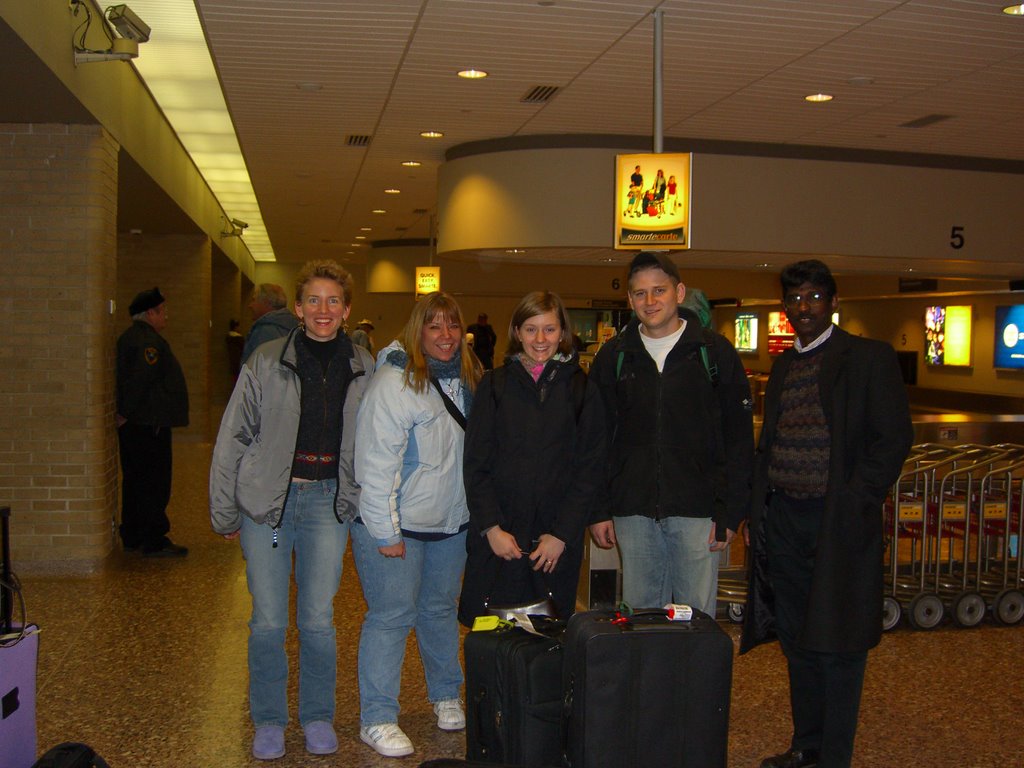
Somehow, though, it helped to hear Pastor Schambach and then others who seconded him insist that we Be Ourselves in all of our glorious ignorance. I'll probably still feel pretty awkward and naive out here, but as long as we stay curious and keep asking questions and keep listening, we'll be alright. Here's a photo of all of us Rural Immersion Adventurers during a break from the workshop, being ourselves in a new place.


This evening Zoey and I made up. She nestled up next to my leg as I read a book on the couch. I think Zoey and I are going to be just fine.

MCK

Saturday, January 12, 2008

Day One

From Ted Kooser's Local Wonders: Seasons in the Bohemian Alps (Lincoln, NE: University of Nebraska Press, 2002):

"Contrary to what out-of-state tourists might tell you, Nebraska isn't flat but slightly tilted, like a long church-basement table with legs on one end not perfectly snapped in place - not quite enough of a slant for the tuna-and-potato chip casseroles to slide off into the Missouri River. The high end is closest the Rockies, and the entire state is made up of gravel, sand, and silt that ran off the front range over millions of years."

This morning our hardy group of six Rural Adventurers, one LSTC professor, and two rural immersion leaders flew to the Rocky Mountains and then drove to Kooser's "high end" of the Nebraska table. It strikes me that the word "Nebraska" is actually kind of shaped like the state - not as it looks on the map but as it might look if you turned it on its side and looked at the high plains of the "N" down to the Missouri River that ends the "a"....in any case, I nodded off on our way out of the city, and awoke to find us driving through wide-open plains. Adam marveled at the expansiveness, to which Dennis, the native Nebraskan accompanying us, responded, "Yeah. You know, you really gotta be at peace with yourself to live out here." As he said this I turned toward the front of the car and watched as we headed down a small hill. At the bottom of the hill the plains seemed to stretch out forever under one of the clearest, bluest, biggest skies I've ever seen. I gazed at what Nebraskan writer Lisa Knopp calls "the seam where sky and land meet." I don't know about having to be at peace - I imagine God still finds ways to wrestle modern-day Jacobs on the banks of the Platte River just as much as on the banks of the Jabbock - but there is certainly a spirit of stillness out here. This is the kind of place where Psalm 8 fits the landscape like a glove:

"When I look at your heavens, the work of your fingers,
The moon and the stars that you have established;
What are human beings that you are mindful of them,
Mortals that you care for them?

Yet you have made them a little lower than angels,
And crowned them with glory and honor.
You have given them dominion over the works of Your hands,
You have put all things under their feet,
All sheep and oxen,
And also the beasts of the field,
The birds of the air, and the fish of the sea,
Whatever passes along the paths of the seas." (vv.3-8, NRSV)


Later we stopped at Cabela's, a massive outdoor sporting goods store. You can find Cabela's all around the United States now, but Cabela's impacts few places the way it impacts Sidney, Nebraska. Cabela's is based here. I didn't fully appreciate this fact until my host family picked me up and gave me a driving tour of the town. Some of the churches were making large, beautiful additions to their buildings. I wondered aloud whether these churches were growing because the town was also growing? "Well," said my host, "Cabela's keeps bringing in more and more people - see that building over there? That's another one of their new corporate offices..."

Of course, it's not all due to Cabela's. The Spirit has been moving in wondrous ways too, and her effects are in full view in the new gathering space of Holy Trinity Lutheran Church, where we'll be based here in Sidney. This entryway is comfortable, spacious, and inviting; it seems to encourage you to stay awhile. It's a place to nurture old relationships at the church and a place to start new ones. It's evidence of flourishing, God-given life here, and the people of Holy Trinity are justly proud of it.


It's also evidence of the many changes at at Holy Trinity in the last several years, changes, I've learned, that have not always been easy even as they've made the place breathe with new life. Tomorrow we'll attend an annual conference on rural ministry and learn about the changing face of rural ministry from pastors and lay people who are doing God's work out on the plains.

For now, though, I need sleep. I hope I'll dream about that wide-open sky, and lose myself in that "seam where the sky and land meet."

MCK

Friday, January 11, 2008

At the Airport

Greetings! I’m Matt Keadle, and I’ll be blogging the 2008 J-term Rural Immersion Class. If you scroll below this post, you can see blog postings from last year’s class. If you scroll above, you can see future postings from me, or maybe, depending on when you’re reading this, postings from some future class that doesn’t even exist yet.

I’m writing this first post from Chicago’s Midway airport, about a 40 minute bus ride from the LSTC campus. In about 90 minutes we’ll be departing for Denver, Colorado, and then we’ll make the drive over to Sidney, Nebraska, where we’ll be staying this year. Here’s a picture of Adam, a fellow Rural Immersion adventurer, and I at Midway airport.


For the last two days we’ve heard about rural life from Rev. Ruth Boettcher, a pastor in rural Nebraska, and Dr. Dennis Gengenbach, a Nebraskan ag producer. It’s been a helpful window into what we’ll be encountering in the coming days. We’ve heard about the challenges Dennis and his fellow ag producers face as they seek to grow food and fuel for the rest of the country (and other countries, too). I have pages and pages of notes and lots of thoughts which are impossible to include here. But in short: Agriculture, we’ve learned, is a highly dynamic field that has changed dramatically in the last few decades, presenting difficult challenges as well as deep joys for its practitioners and their families. We’ve also learned a bit about how rural churches are being revitalized as they have rediscovered anew the gospel of grace for all of God’s people. And I’m sure there will be much more to come soon.

I work at an after-school program when I’m not blogging, and one of the students yesterday was giving me advice about blogging. He also has his own blog. He’s in second grade. He said, “Matt, let me give you a helpful tip. Keep your posts short.” Then he proceeded to give me another helpful tip, which amounted to Googling a fancy program that tracks the number of hits you get on your blog. Did I mention he’s in second grade? Anyway, for now I’ll stick to the first piece of advice and keep it (relatively) short.

Besides, Adam asked me to watch his bag. Hmm, I should probably make sure it’s still there…

Matt

Friday, January 26, 2007

The End of the Line

Like all good things, J-term too comes to an end, and that end is now. From here on out, all of our ruminations about our time in Nebraska are for us to ponder in our hearts, not in public, as we continue our journey through seminary. To all of the wonderful people that we were fortunate enough to meet during our trip; thank you for your hospitality and your patience. You welcomed us into your homes and lives and we were lucky to have you. Thank you to everyone who took the time to read what we wrote here. We appreciate it and hope that you got something out of it. We certainly did.

Good night sweet blog, and flights of angels sing thee to thy rest.

Thursday, January 25, 2007

Mea Culpa

While stuffing my laptop into its carrying case for use in class presentations today, I quickly removed some papers that were hanging about in the case. My eye caught on one of the papers and I realized that it was something that I had promised to scan and upload to the blog awhile ago, and that I had failed to do so. So without further ado, here it is.


This artwork is from the cover of a bulletin from Followers of Christ Church. The church is led by Pastor William Barth and is located in the Nebraska State Penitentiary. The design was created by one of the congregants and is shown here with the permission of Pastor Barth.

Vitality

There are seven principles, or practices, defined in Discovering Hope, by David Poling-Goldenne and L. Shannon Jung. They are:
Prayer
Worship
Discipleship
Evangelism
Servanthood/Ministry
Leadership
Understanding Context
The final practice, Understanding Context, was the purpose of my last post. Therefore, I will not consider it here. However, I will spend some time reflecting on St. Matthew (and what I know about St. John), rural ministry, and these practices.

Prayer: Prayer is a primary practice among vital churches in all settings. In my worship class this past semester, my professor, Dr. Mark Bangert, suggested that we are the best answer to our prayers. Our prayers cause us to act. In all honesty, I did not see a lot of thoughtful prayer on this trip. I do not mean that as a criticism, but as a statement of fact. I ate a meal of leftovers one night and someone said "It's already been prayed over." Or, during the prayers of intercession, even in examples of worship services given to us at a conference, they were listed as coming from a worship resource instead of being written to suit the needs of the community. Lots of churches do that, but what are they loosing when they do so? Why isn't prayer a common practice? What effect is it having on the ministry in these areas? I am very curious to see a church with a strong prayer practice. Discovering Hope is full of examples, but I would really like to know how they practically work. What does a strong prayer ministry entail? How does a church decide what to focus on in its prayer ministry? What would be unique about that in a rural setting?

Worship: By far, the most exciting worship I went to on this trip was the worship at the Rural Ministry Conference on our second Saturday in Nebraska. It was geared toward our purpose. I also attended a workshop there on worship. It was taught by Pr. Nancy Nyland whose former congregation is outlined in Discovering Hope. She provided us with several examples of worship services she had done over the years. While I may not be brave enough to do the services in my own church, the strongest key to them was the fact that they were written for certain groups on specific days. For example, she had written a liturgy for Rogation Sunday, to commemorate the time for planting. Both Nancy and the book seem to emphasis doing things differently and creatively. However (and perhaps those things are a part of this), I think that vital worship is planned to suit the needs of the community while remaining open to newcomers. That does mean that it is important to create a level of comfort for worshippers. As Nancy pointed out, there does need to be some level of predictability, such as a familiar order to things. I think that if the congregation is comfortable with the worship service, they will be able to be more available to help visitors, they can participate with greater energy, and they can become more attune to the meaning of what is happening. I am not a proponent of doing things the same way every time, but, rather, or being aware of a congregation's needs and listening to them.

Discipleship: Discovering Hope thinks that learning is at the center of discipleship. They point out the importance of "Bible study and devotional reflection" (46). I never attended a Bible study at St. Matthew, but Marianna, my host mom, spoke glowingly of the Bible studies she attended. This does seem key. At the Rural ministry Conference, creative and thoughtful education through Sunday School and Confirmation ministries was the topic of two workshops. These things give congregants the tools to share with others what they have learned. Discovering Hope calls this "Disciples mak[ing] disciples" (47). I worry, however, that Bible studies may not be attended or at times readily available to everyone in the church body. More can be done to model behavior. Prs. Amalia and Eric at Long Branch Lutheran talked at length about how they struggled to model hospitality, leadership, and even family devotions for their congregation. Making disciples is not an easy task. One thing I thought that was frequently missing was the training of lay leaders to also participate in this modeling behavior.

Evangelism: I have a sneaking suspicion that what I have to say here will cause the greatest knee-jerk reaction among those who hosted us throughout our journey. While I am sure evangelism is happening among Nebraska's rural churches, I didn't see it on any explicit terms. These churches do do service, which puts their name out there, but I saw very little done to focus on bringing in new people. There seems to be an understanding that everyone knows the church is there, and anyone who wants to come, can. At the Rural Ministry Conference we talked about the importance of relationships in rural congregations (those of us on the trips really felt that this is a staple in ALL congregations) (I also think it is worth noting that "evangelism" was not mentioned, nor was it a "what's working workshop" topic). The congregations we met were pretty good at establishing relationships, but, at Salem, one member commented that even after several years she had still felt like an "outsider." The speaker at the Rural Ministry Conference talked about the importance of being people-centered instead of program-centered. I totally agree, but programs (ie, service projects, childcare, leadership retreats, bible studies, Sunday School, Confirmation - are these all not "programs") have a place in evangelism. They are places to invite people. They are places to encourage members to engage their neighbors. They are places were people can be on the same playing field, reducing the insider-outsider feel. I am not sure that I have the right answer, but I certainly feel that I still have a lot to learn about how successful evangelism works in rural areas.

Servanthood/ministry: Servanthood was something I saw everywhere I went in Johnson. People gladly giving up their time to help others. The rescue squad and fire department are volunteers! People whose children are grown are religiously at the basketball games to support the teams. Every church we went to made quilts for Lutheran World Relief. However, it seems that the churches limit their own ministries because they know of the many things their members already do. What effect does this have on the church members? What if they are not involved in these community service projects? What do they do then? Discovering Hope points out that these caring ministries must be oriented to the needs of the community in order to be successful and/or vital. I am not sure that I am able to answer the question I'm going to ask, but: what ministries might be started at St. Matthew/St. John to help meet the needs of the community?

Leadership: Here is a place where I saw some vitality. I met several strong pastors who are cornerstones of the community. I saw pastors who attempt to model the godly life for their congregants. Moreover, I met amazing lay leaders with genuine hopes and dreams for their congregation. They were storehouses of information, waiting to be taped. I think vital rural ministry will look inward at itself for ideas that can be used outward. I don't mean that they will be centered with themselves, but that it will listen to the needs expressed by their members. This is an excellent place to start when looking for ways to jump start any of the above ministries. This is where I saw the most success in Nebraska. First, look at all the leaders who were willing to host our group. We met people at the Sunday service who had stories to tell about what they had seen and are seeing happening in their areas. Many of the places we toured we places of employment for members of the area churches. They are the frontline of evangelists, whether or not they know it! The ladies went to Salem Lutheran and met lay leaders who were thoughtful and aware what was going on in their community, what was good at their church, and the places they were lacking. They were thoughtfully pondering where to go from where they are now. At the Rural Ministry Conference, there were many pastors, but there were just as many lay leaders. They had great ideas!


It may seems as though I am being harsh here. That is not my intent. Every congregation has room for improvement. As a non-member and an outsider, I am able to look more objectively at what is going on. On the other hand, I know that I am unaware of the full scope of a congregation's ministry. A good portion of my comments, I hope, will serve me well when I have my own congregation. I think the greatest key to ministry, in any of the areas above, is careful discernment of God's call. He is the most aware of the entire situation and can guide us in ways we never imagined.

Wednesday, January 24, 2007

Trade Offs

Anywhere one lives, there are bound to be some good points and some bad points. It's a thought that keeps on coming back to me since we left Nebraska. Be it Chicago vs. Nebraska or just rural vs non-rural, what's the trade, what are some of the strong points of each and some of the weak points? Everyone will value certain things differently, so I can't say how it would all stack up according to someone else. All I know is what are the factors that strike me.

Yesterday I was downtown, making my way to the nearest stop for the #6 Jackson Park Express bus, when I was stopped and ordered to proceed through six lanes of traffic and use the sidewalk on the other side of the street. This was because they were filming Fred Claus. (see the trailer here) right outside of Nordstrom there and had commandeered the whole area. This is where people value things differently. Some would be thrilled. Maybe they would get to see Vince Vaughn, Paul Giamatti or somebody else. Me? I was mostly just annoyed at having to cross traffic.

There are a lot of things like that. A city has certain amenities, but each person values them differently. I enjoy the shopping. As for sports, I am at best, indifferent. I have a sneaking fondness for things like opera and ballet, but not the resources to support such interests, so it makes little difference. I enjoy museums and the variety of restaurants, but rarely eat out. The public transportation is great, because I prefer not to deal with the traffic and parking here. However, it has its limits. I can't carry heavy furniture home with me on the el and people consider things to be so easily available in Chicago that they aren't very helpful about my need to be able to get the furniture somewhere. Whereas, when something is considered to be a rarer commodity locally, people are sometimes more helpful. (I've known someone to take a furniture shopping list composed by family, friends, and co-workers, buy the stuff and then drive it more than 2,250 miles to its destination, since they were going that way anyway.) Sometimes when I'm walking alone after dark, I wonder how much of the need for constant vigilance I would be happy to trade for sidewalks that rolled up shortly after six. So how do you feel about pollution obscuring the stars or a lack of options for your Friday night entertainment? Those are decisions that we all need to think about and be prepared to make when the time comes.

Reflecting

There are a few things I would like to do to reflect on my rural immersion. First, I would like to use Johnson and St. Matthew and St. John as a kind of case study of rural life. Thus, I will consider what I learned about Johnson, as Lawrence Farris suggest in Dynamics of Small Town Ministry. Then, I will consider how St. Matthew compares to the principles of vital church ministry established in Discovering Hope.

In his book, Farris suggests that a new pastor do a few things to get to know the community one is entering. He suggests that understanding the town's dynamics will help one understand the people. Farris outlines five areas one should investigate: area geography, town geography, town history, town culture, and town values. Farris also suggests why these things are important. I would like to consider each area independently by outlining the things I noticed during my short stay in Johnson and by asking any remaining questions I have.

Area Geography: Several of the books we read cite R. Alex Sim who, in his book, Land and Community, outlined four types of small towns: Ribbonvilles, Agravilles, Mighthavebeenvilles, and Fairviews. The names say a lot about them. After visiting Johnson, I think Johnson is a Mighthavebeenville. Truly, it is a great place, but if Johnson's residents need to do shopping or be entertained, they drive 15 minutes to nearby Auburn, which is an Agraville. Farris suggests that Mighthavebeenvilles are controlled by and dependent on the nearby Agraville, as seems to be the case in Johnson.

The area about Johnson is hilly (here is Johnson, its location in Nebraska, and its relief). From a high hill, one can see neighbors in all directions. Sometimes tall trees get in the way. Many houses use evergreen trees on the north and west sides to help protect them from the wind in winter. Most of the surrounding area is farmland. The people here seem very close-knit. My host mother could point out each house and tell me volumes about who lived there. I think the fact that they can see one another so easily leads to this open feeling.

Some remaining questions: What is the year-round weather like? How does that effect this area? What does the area look like at other times of the year? How does that effect people?

Town Geography: Johnson has a main street. On main street, there is a small grocery store, a gas station called "The Quick Stop" (though that name does not appear on the building), the fire station, the grain elevator (where the picture at left is taken), the meat processing plant (Wednesday is slaughtering day), the cafe, the tavern, the bank, the small funeral home, the insurance company, and the school. St. Matthew and the local Methodist church are two blocks west of the main drag. There is also a baseball diamond on the west side of town. One can see the remains of a lumber yard. Some of the business are boarded up.

The sidewalks roll up early in town, probably around dark. They cafe is open for lunch after church on Sunday. It has a buffet. There are no francaise stores. Other than the Cafe and the White Horse (the bar) there are no other restaurants. The signs pointing to the town talk about the famous chicken barbecue

Remaining questions: What was this town like in its heyday? What were the businesses that are now closed? What is the town like during the chicken barbecue? Who comes?

Town History: I was unable to glean much about the town's history. It seems to be very involved in agriculture. I did glean some recent history. For example, across the street from St. Matthew is a Habitat for Humanity House. Unfortunately, the family had some troubles, so the status of the home is unclear. The meat processing store used to be owned by Augie and Lois, the family Peter stayed with.

Remaining questions: What is the town's history? What were have been Johnson's defining moments? When did businesses start to close? Have the businesses there always been the same? What about the churches? When did they come in? Who founded them?

Town Culture: Farris outlines six things to consider about an area's culture: economy, politics, social life, education, and cycle of events. Johnson's economy is agricultural. The grain elevator seems to the hub of what's going on in town. According to the US Census Bureau, the two other major employers of people living in Johnson are education and "Transportation, warehousing, and Utilities." I was not able to tell much about the political situation in Johnson. I think it is worth noting that the rescue squad and fire department consists entirely of civilian volunteers. The social fabric of Johnson is complex. Of course, there is the chicken barbecue. There also are people who are regulars in the cafe and the White Horse. Education is extremely important in Johnson. The students had access to laptops. The teachers were very dedicated. Nebraska has open enrollment. Students DO come from other districts to Johnson. The offer a very quality education in their K-12 school. Finally, the cycle of events. The chicken barbecue is part of the cycle. Being an agriculture society, planting, harvest, and calving all, inevitably have to do with this cycle.

Remaining questions: What is the political situation in Johnson? What trend is being seen in the local economy? Why is education so important in this community? What are other important events in the town's year?

Town values: Farris, again, suggests four key values: community, longevity, place, and forbearance. Community was key in Johnson. One night the ladies of our group got together at my host mother's house to watch a chick flick. Marianna and I offered to take Joy home. On the way, we got lost. We couldn't find Joy's hosts' house. It became the talk of the day the next day because Marianna should have known where Mary (Joy's host mother) lived. Being a longstanding member of this community means being aware of where others live and what is going on in their lives. For example, one couple clips the crosswords from the newspaper for Marianna. If she's not there one week, it is assumed that she is with her daughters in Kansas (she normally lets Pr. Catherine know where she's going). If she were gone for more than a week, they would get concerned. That is very important to this community. Longevity is also important. Much of this is displayed in how things are described. Instead of being "the white house with green shutters" it is "So-and-so's Old House." So-and-so might have lived in the house three owners before, but that doesn't stop the locals from using their names to describe the landmark. Another example is the importance of the cemetery fund. Many of the pastors we spoke with told us of the untouchable, massive cemetery fund, used to care for a church's cemetery even after the church was gone - how's that for longevity? The idea of place as a value has something to do with being good stewards of the earth. It also has something to do with maintaining the town's existence. Johnson might be a good example of this because, despite of growing town nearby, the residents still exercise loyalty to their local businesses. They know the potential collapse that may result if they search outside of Johnson for things. They understand the consequences of their actions. Forbearance. I could go on and on about this topic. The loyalty I talked about above is one example of the community's forbearance. Another example might be the Habitat House. Or, the involvement of all the churches in Lutheran World Relief quilting projects. Or, the presence of community members at basketball games. And surely, the untold stories of generosity towards others.

Remaining questions: What would a resident list as Johnson's key values? What might they add to my list?

Monday, January 22, 2007

Unrepentant Laziness

Ahhh. Back to Chicago and nothing I have to do right now. I went, bought groceries and came back to my apartment which features a supply of down comforters (really, I own three) and a stack of library books that aren't due yet. I think I'll just hole up here and relax from all of the excitement of Nebraska, not emerging until it's time for people to do their presentations about the trip. But until that day (Thursday and Friday) comes, I think I'll just sit around, processing my experiences/watching television (that, and going "wow", I forgot how small house lots are in Chicago). If I have any deep thoughts in the mean time, I'll be sure to let you know. But if any do occur, I'm quite sure it won't be before noon. Until then - sweet dreams and I'm off to the land of fluffy blankets.

Home Again, Home Again, Jiggity Jig

Okay, maybe a cheezy saying - it's very common in my family. I imagine my parents are smiling as they read it.

I wanted to let our readers know that we are home. We had a nice evening last night - we watched both the Bears and Colts win from the large screen T.V. Zach is watching in Joy's picture, below (the T.V. is not in the picture). We really enjoyed the camp's hospitality center (dubbed "the land of milk and honey"). We had a quiet night. On the trip to the airport, I tried to get carsick, but I'm fine now. Our flight was great.

I'm glad to be home.

I really wanted to write to tell you, dear reader, to keep reading! If you have a chance, check us out on Friday. By that time, I know I will have posted a sumation bit about my impressions of the trip and what I learned. See you then!

Sunday, January 21, 2007

I Corinthians

This morning our professor led us in worship (LBW setting one, no communion). There was no sermon, but we were supposed to sit there, meditate on the gospel for the day (from Luke, Jesus reading in the temple) and share our thoughts on it. However, my attention was caught, not by the passage from Luke, but by the second reading, from I Corinthians Chapter 12. It’s a very well known passage, with Paul talking about how the body of Christ is composed of many parts.

Something about the whole J-term experience this year made it strike me especially powerfully today. It struck me on a couple of different levels. The first level involved the different personalities on this trip. On most issues raised in the group, I am on one side of an issue and my classmates are on the other side. We get all excited and our professor wisely moves us on to another topic. Now I, of course, always believe that I am right, and am more than willing to defend my views. Not only do issues relating to religion tend to be rather important to me (I mean, one would hope that they are important to a master of divinity student.), but many have been formed by hard experience which is not easily ignored or discarded. However, most of the time, my classmates disagree with me. Issues of religion are no less important to them and based on the passion with which they talk about their experiences, they have obviously also had important experiences which have led them to different conclusions. We are very different people and will make different sorts of ministers. However, as different and contradictory as what we do and what we seek may seem, it doesn’t mean that any of us will be less useful. The body of Christ is composed of many different parts and we will serve somewhat different parts in different circumstances, because no two congregations are identical.

On another level, people connect to God in different ways and it is always a struggle to get the various ways to see that the various ways are equally valid. One person will feel closest to God when striving to bring God’s justice in the world. Another will feel closest when surrounded by others singing “Shine Jesus Shine”. A third may feel closest when deep in silent contemplation in a monastery. Yet another may feel closest to God when reading a lengthy treatise on theology. They are all very different ways of seeking relationship with God, yet they can all bring about the desired result. The problem comes when looking from our own path to God, we see that another person’s path has none of the same guideposts as ours, and so we assume that their path cannot be truly leading to God. One pastor once described God as a giant barn where God’s presence can be found in every inch of it. Our lives and our experiences of God are like a baseball that we get one chance to throw at that barn. That ball’s trajectory comes into contact with the barn and maybe even the space inside, but only a small portion of it. The reality of God is so immense that we can’t wrap our minds around it. Another person’s path and interpretation of what they’ve passed through may not intersect with ours at all, but that does not mean that they are not experiencing God.

Churches are like that too. They experience and express God in a number of different ways, but most importantly, they are all experiencing God. Different churches, of different sizes and different locations serve differently, but they all serve the same One. Some churches are about the excellence of their choirs and some are about the closeness of their communities, but all have the same goal of drawing people closer to God. Be it an urban church or a rural church, all are necessary to the body of Christ. There are different ways to serve God and different places to do so, but what is essential is that we serve God. Who knows what part of the body of Christ we will be in at the end of our four years at LSTC and whether or not it is a part that we would have picked. What we need to do is trust that God is putting us where God needs us.

There are different kinds of gifts, but the same Spirit. There are different kinds of service, but the same Lord. There are different kinds of working, but the same God works all of them in all men. (I Cor 12:4-6)

But in fact God has arranged the parts of the body, every one of them, just as he wanted them to be. If they were all one part, where would the body be? As it is, there are many parts, but one body. (I Cor 12:18-20)

Now you are the body of Christ, and each one of you is a part of it. (I Cor 12:27)

(above quotes taken from the NIV)

Walking in a Winter Wonderland

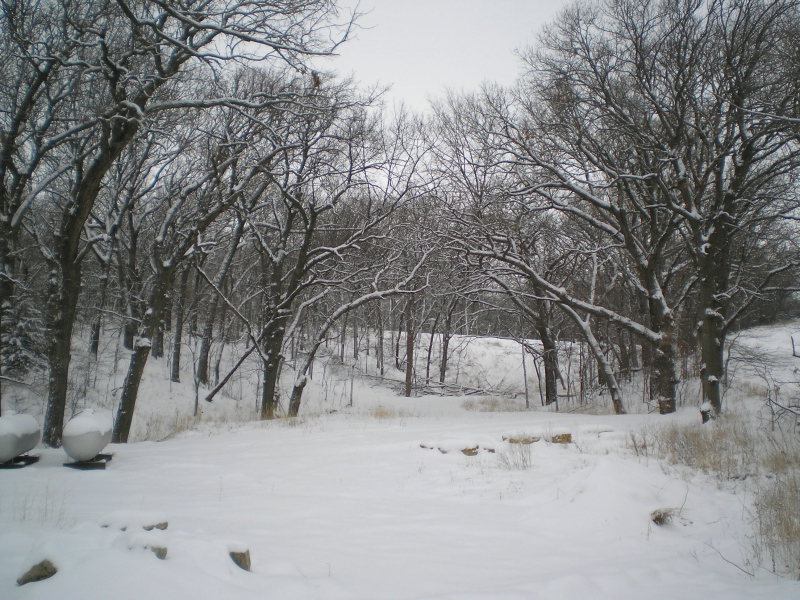
OK, they were right. The scenery here is pretty as a picture. So . . .


pretty scenery


more pretty scenery


the Swanson Center aka "The Promised Land" to me and my classmates - It is right down the road from where we spent the night and it is fully stocked with comfy chairs, a giant television to watch the Chicago Bears play, a multitude of beverages and most any snack available. It's amazing.


Enjoying the promised land (featuring Zach and our professor, Peter V.)